Where to Spend Your Wedding Décor Budget: 7 High-Impact Priorities for Toronto Couples
The best way to spend your wedding decor budget is to prioritize the areas that shape the room, appear most often in photos, and affect what guests experience for the longest time. For many weddings, that means the ceremony focal point, reception tables, florals, lighting or candles, and the labour required to install everything properly.
Note: Venue policies, fire and safety codes, permit requirements, and other regulations can change over time. Always confirm current requirements directly with your venue, vendors, and relevant local authorities before finalizing your wedding décor plans.
| Priority | Spend More When | Scale Back When | Why It Matters |
| Ceremony focal point | The space needs a visual anchor | The venue already has a strong backdrop | Frames vows and key photos |
| Reception tables | Guests will spend hours there | Included tabletop pieces already fit | Repetition creates room-wide impact |
| Florals | Flowers are central to the design | You are flexible on varieties and density | Adds colour, texture, and scale |
| Candles and lighting | The room needs warmth | Existing lighting already works | Changes how the design is seen |
| Rentals | Included items clash with the look | Existing furniture already fits | Repeated upgrades can transform a room |
| Large installations | The space needs height or scale | Architecture already does the work | High impact, but more logistics |
Start With the Venue Before Dividing the Decor Budget

The venue should be the first filter for every décor decision.
A large ballroom with high ceilings can make small arrangements feel lost, while an intimate loft or historic Toronto venue may need less because its architecture already provides character.
Before approving décor, confirm what the venue includes and what it restricts. Ask about candles, ceiling installations, wall attachments, setup windows, loading access, elevators, room flips, and teardown deadlines.
These details can affect both design and labour. The City of Toronto Display Guidelines, for example, require loading and unloading at covered civic facilities to be coordinated based on availability. They also note that freight elevators may be scheduled in specific time blocks and that installation and dismantling schedules must be approved in advance. These rules do not apply to every private Toronto wedding venue, but they illustrate why access and installation requirements should be confirmed before the décor plan is finalized.
1. Prioritize One Strong Ceremony Focal Point
If the ceremony area needs décor, start with the place where you will stand.
A floral arch, grounded floral arrangement, draped structure, or backdrop creates a visual anchor for the ceremony and photos. For many couples, that provides more impact than spreading the same budget across several small aisle accents.
A focal piece becomes more useful when it can serve a second purpose. Ceremony florals may move behind the sweetheart table, beside the seating chart, or near the cake.
Repurposing still requires enough time, staff, safe access, and a design that can actually be moved. If the venue already has a garden view, fireplace, staircase, or dramatic architectural feature, consider framing it instead of covering it.
2. Give Reception Tables a Meaningful Share of the Budget
Guests can spend hours around the dinner table, which makes reception tables one of the most useful places to invest.
Centrepieces, candles, linens, chargers, glassware, napkins, and place settings all contribute to the design, but upgrading every category is rarely necessary. If the venue already includes neutral linens and chairs that work with the palette, keep them and direct more of the budget toward centrepieces, candlelight, or the head table.
For a tighter budget, keep standard linens if they work, use smaller floral pieces or candles on selected tables, and reserve fuller arrangements for the head or sweetheart table.
Guest count matters because per-table and per-person upgrades multiply quickly. Choose the repeated detail with the biggest visual difference before upgrading several categories at once.
3. Spend on Florals Where People Will Notice Them
A floral-forward wedding does not require flowers in every corner.
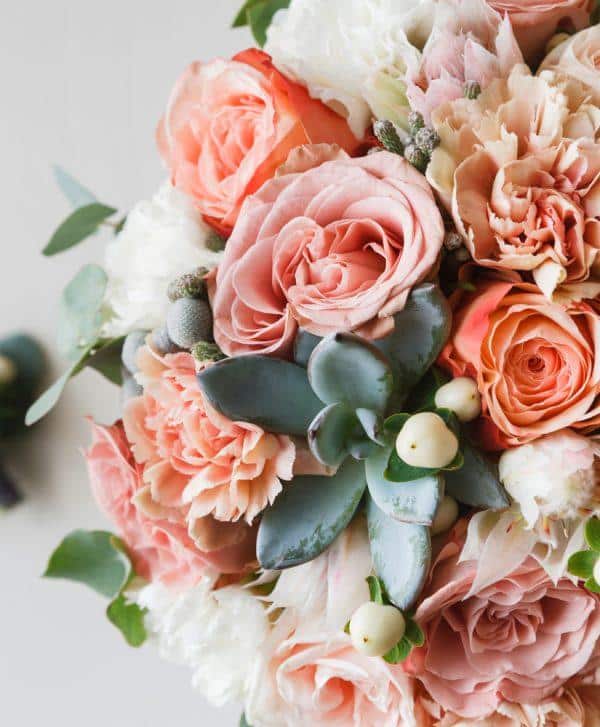
Start with the floral moments guests will see repeatedly and that will appear in important photos. These may include personal flowers, the ceremony focal point, guest-table centrepieces, the head or sweetheart table, and one statement arrangement near the entrance, bar, or seating chart.
Then simplify lower-priority zones.
For couples working with a tighter décor budget, flexibility can help. Instead of building the entire design around one exact flower variety, focus on colour, shape, texture, and overall style.
Floral sourcing changes with season, availability, and quality, so suitable substitutions may help preserve the design direction without making one specific flower essential to the entire plan. Design for the actual table size and room rather than the inspiration photo alone.
Explore Our Wedding Floral Services
4. Use Candles and Lighting Carefully for Room-Wide Impact
Florals add shape and texture. Lighting affects how those details are seen.
Candlelight can create warmth across a reception without requiring large floral arrangements on every surface. Uplighting or other event lighting can also help direct attention toward the areas where you have invested more heavily.
Safety and venue rules come first.
Ontario’s current Fire Code under O. Reg. 213/07 regulates open flames in buildings used for public assembly. Decorative and lighting devices with open flames must be securely supported in noncombustible holders and positioned or protected so combustible materials cannot come into contact with or be ignited by the flame, unless approved.
Individual venues can set additional restrictions, so confirm the venue’s candle policy before ordering holders or planning a reception design around real flames.
Electrical décor deserves the same planning. The Electrical Safety Authority’s Special Events and Celebrations guidance recommends checking for approved product certification marks on electrical equipment and choosing products designed for the environment where they will be used, including indoor, outdoor, or wet locations.
For larger lighting plans or temporary power, confirm requirements with the venue and qualified suppliers.
Explore Our Candles and Lighting
5. Upgrade Rentals Only When They Change the Design
Rentals can be worth the spend because they repeat throughout the room.
Changing chairs, linens, chargers, or glassware across many place settings can create more impact than decorating one corner. Replacing something simply because it is included, however, is not automatically a good use of money.
Ask whether the upgrade solves a real design problem.
If the venue’s standard chairs already complement the room, keep them. If the linens fit the palette, direct the savings toward florals or a stronger focal point.
Learn More About Our Wedding Rentals
6. Reserve Large Installations for Spaces That Need Scale
Hanging florals, ceiling installations, draping, floral walls, large arches, and custom structures make the most sense when they solve a specific visual problem.
They work best in large ballrooms, high-ceilinged rooms, blank head-table walls, or spaces that need one dominant feature. They may be less valuable when the venue already has strong architecture.
Large pieces also bring more logistics. Installation time, structural requirements, rigging approval, electrical needs, staffing, access, and teardown can all affect feasibility and cost.
For events involving substantial temporary structures, Toronto’s current Guidance for Planning Events in Toronto notes that certain tents, stages, large art installations, suspended equipment, and other temporary structures on applicable event sites can require permits or engineering review. The City also recommends checking requirements with Toronto Building during event planning.
Private wedding venues may have different approval processes, so ask what is required before committing to a large installation.
7. Protect Part of the Budget for Setup and Teardown

One of the easiest wedding décor budgeting mistakes is pricing only the visible objects.
Flowers need transportation, rentals need delivery and collection, and room flips may require several people working within a short window. Loading access, GTA travel, and late-night pickup can all affect the service plan.
The City of Toronto’s facility guidance is a useful example of why these details matter. At the civic facilities covered by its policy, delivery schedules must be coordinated in advance, freight-elevator access depends on availability, and additional staffing may result in extra costs when deliveries fall outside normal operating hours.
Private venues set their own policies, but the planning lesson is the same: ask about access before assuming setup will be straightforward.
When comparing décor proposals, look beyond the number of arrangements or rentals listed. Confirm what delivery, installation, ceremony-to-reception transfers, pickup, and teardown are actually included.
Explore Our Wedding Setup & Styling
What Should You Cut First If the Decor Quote Is Too High?
If the first proposal comes in above budget, avoid reducing every category equally.
Start with:
- small décor in low-traffic areas
- duplicate focal points
- multiple upgrades within the same tabletop
- florals placed where guests will barely see them
- one-use pieces that cannot be repurposed
- décor that covers venue features you already like
Protect the elements that establish scale and cohesion. One well-proportioned focal point can do more for the room than several unrelated decorative moments that each feel too small.
Use This Five-Question Wedding Decor Budget Test
Before approving an item, ask:
- Will guests see it for more than a few seconds?
- Will it appear repeatedly in important photos or video?
- Does it improve a large part of the room or one small area?
- Can it serve more than one purpose?
- What delivery, installation, transfer, or teardown does it require?
This helps separate meaningful design decisions from décor added simply because an empty corner exists.
How VintageBASH Can Help You Prioritize
VintageBASH offers wedding florals, ceremony and reception décor, centrepieces, backdrops, installations, tabletop pieces, rentals, and wedding packages for Toronto and GTA events. Depending on the service selected, setup, teardown, delivery, and ceremony-to-reception transfers may also be available.
If you are choosing between fuller florals, upgraded rentals, or one stronger focal point, a consultation can help determine what deserves the larger share of the budget for your venue and what can stay simple.
Frequently Asked Questions
How much of a wedding budget should go to decor?
There is no reliable universal percentage for every wedding. Set the décor budget after you know what the venue provides and which visual elements matter most. A blank-slate venue may require a very different décor plan from a ballroom or historic property with furniture, lighting, and architectural details already included.
Should I spend more on wedding flowers or rentals?
Spend more on the category that solves the bigger design problem. Florals may deserve more if flowers are central to the ceremony, tables, and photos. Rentals may deserve more if the venue’s included furniture or tabletop pieces conflict with the look.
Is ceremony decor worth it if the ceremony is short?
It can be, especially when the ceremony focal point appears in important photos and can be reused at the reception. If the venue already has a strong backdrop and the décor cannot be repurposed, a simpler ceremony design may make more sense.
What wedding decor can be reused from ceremony to reception?
Depending on the design, arches, grounded floral arrangements, aisle flowers, candles, signage, and some backdrops may be repurposed. Timing, distance, stability, venue access, and staffing determine whether a transfer is practical.
When should couples book wedding decor and florals?
There is no single deadline for every vendor or date. Start once your venue, date, guest count, and general design direction are clear enough for an informed proposal. Large installations, custom pieces, and higher rental quantities benefit from earlier planning.
Spend Where the Room Will Feel It
The smartest wedding décor budget is not the one with the most items. It is the one that makes the right parts of the venue feel intentional.
Start with the space, protect the focal points, invest where guests spend their time, and budget for the labour and logistics that make the design possible.
You Might Also Like:
- The Guild Inn Estate: Timeliness Wedding Inspiration & Ideas
- Elora Mill Venue: Breathtaking Wedding Inspiration & Ideas
- 25+ Stunning Ideas To Use Baby’s Breath Wedding Flowers & Decor