Artificial Florals Are Becoming A Modern Wedding Essential
Walk into almost any wedding venue in Toronto this season and you’ll find it harder than ever to tell real blooms from faux ones. That’s not an accident. Florists and event designers have spent the last decade refining silk and foam flower construction, and couples have taken notice. What was once a budget fallback is now a genuine design choice, chosen by planners who want control over colour, shape, and timing that fresh flowers simply can’t offer.
The shift isn’t about cutting corners. It’s about rethinking what a wedding flower needs to do: survive a twelve-hour day, hold its shape through a humid July ceremony, and still look flawless in photos taken months later. Fresh flowers wilt. Artificial ones don’t. That single fact has quietly reshaped how florists and planners approach weddings of every size and budget.
Why Couples Are Choosing Artificial Florals
Sustainability sits at the top of the list for many couples. The floral industry has a well-documented waste problem, with the Sustainable Wedding Alliance noting that a large share of wedding flowers are discarded within days of the event. Fresh arrangements are typically composted or binned once the reception ends, and the carbon cost of flying blooms in from overseas growers adds up before a single stem is arranged. High-quality artificial florals sidestep both problems. They can be reused for anniversaries, styled shoots, or passed on to another couple entirely, which makes them one of the more straightforward sustainability upgrades a wedding can make.
Longevity matters just as much on the day itself. Bouquets get set down, bridesmaids wait in the sun for photos, and centrepieces need to look as good at midnight as they did at 2pm. Fresh flowers droop under those conditions. Artificial ones hold their form regardless of heat, humidity, or how long the reception runs.
Then there’s the allergy question, which planners raise more often than most couples expect. Pollen-heavy arrangements can be a real problem for guests with respiratory sensitivities, and venues with strict scent or allergen policies increasingly steer clients towards artificial options as a practical workaround.
Quality has caught up with demand. According to Rachel Dunn from The Faux Flower Company, a leading UK supplier of luxury artificial flowers and botanicals, high-quality silk blooms are now indistinguishable from their fresh counterparts in photographs and, increasingly, in person. The improvements in petal texture, colour gradation, and stem construction mean guests often don’t realise the arrangements are artificial until someone tells them.
Budget predictability is the other quiet advantage. Fresh flower pricing swings with season and availability, and the Statista wedding industry data consistently shows florals among the most variable cost categories in a wedding budget. Artificial arrangements are priced once and don’t shift with weather, supply chains, or last-minute substitutions from a florist running short on peonies.
Styling Artificial Botanicals for Different Wedding Themes
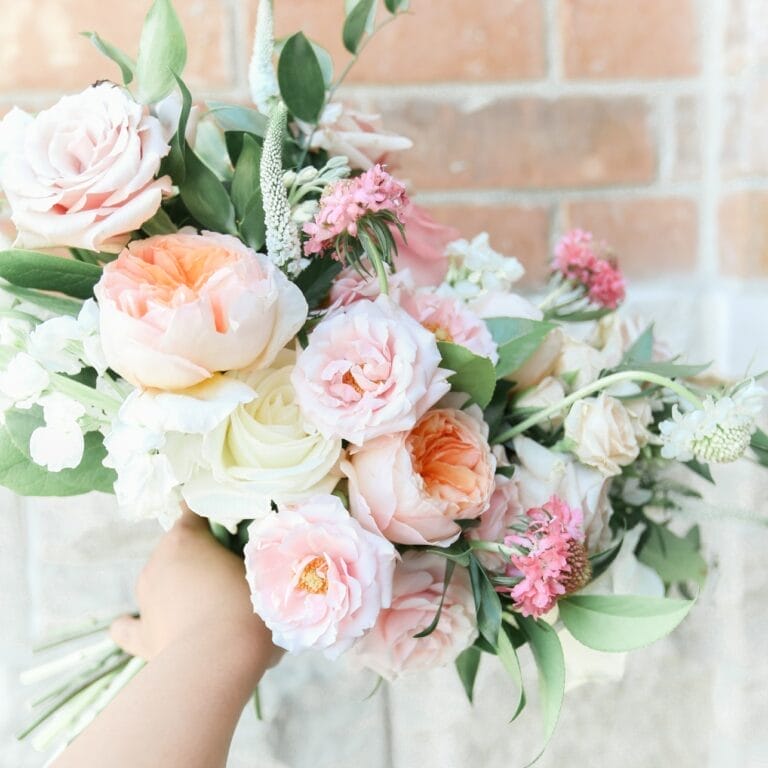
For a classic, romantic wedding, large-headed silk roses and peonies in soft blush and ivory tones work well paired with trailing greenery. The key is choosing stems with visible texture variation rather than uniform, flat colour, which is what tends to give artificial flowers away.
Rustic and barn-style weddings suit looser, wilder arrangements: dried-look silk wildflowers, eucalyptus, and pampas grass mixed with real wood or wicker elements. The imperfection of a loose, asymmetric arrangement actually photographs better than a tightly controlled one.
Modern and minimalist weddings do best with a restrained palette, think single-stem arrangements of calla lilies or anthurium in a neutral ceramic vase, letting the flower’s shape carry the design rather than volume.
For winter weddings, artificial florals solve a genuine supply problem. Faux white roses, amaryllis, and frosted greenery can be combined with real pinecones or candles without worrying about cold damage or limited seasonal stock, something the WeddingWire planning guides regularly flag as a winter-specific challenge for couples working with fresh stems. Across every theme, the detail that separates a convincing arrangement from an obviously fake one is scale and stem variation. Mixing bud sizes, leaf shapes, and a few unopened buds mimics how flowers actually grow, rather than presenting every bloom at identical, full maturity.
The Practical Takeaway
Artificial florals have moved well past their reputation as a compromise. For couples weighing sustainability, budget certainty, and a flawless look that lasts the entire day, they’re now a legitimate first choice rather than a backup plan. The best approach is to treat them the way you would fresh flowers: work with a supplier who understands construction and colour matching, choose arrangements with natural variation, and build the rest of the decor around them rather than the other way round.